INNOVATION
Can Algorithms Outpace the Lab in Drug Discovery?
AI platforms are transforming protein design, slashing timelines and costs as major pharma firms race to embed digital tools into biologics R&D
25 Feb 2026
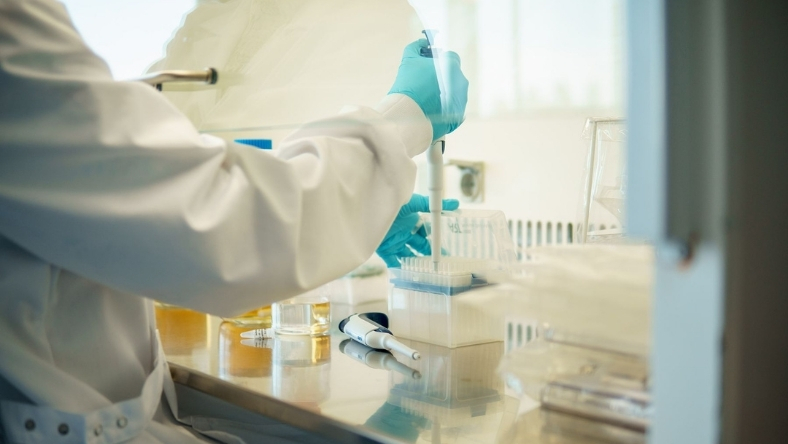
Artificial intelligence in drug development has moved from slide decks to laboratory benches. In biologics, where medicines are built from engineered proteins, algorithms are beginning to shape what scientists test before they ever pick up a pipette.
Cradle, a firm offering an AI-driven protein-engineering platform, says six of the world’s 25 largest pharmaceutical companies now use its tools. That suggests a shift. For years, drugmakers treated AI as an experiment, running pilot projects on the margins of research. Now some are weaving it into core discovery work.
The premise is straightforward. Machine-learning models analyse existing data on protein sequences and structures, then recommend precise alterations likely to improve stability, efficacy or manufacturability. By narrowing the field of candidates before laboratory testing begins, researchers can avoid many costly and slow experiments. According to company statements reported by PR Newswire, some teams have sped up early discovery work by as much as 12 times and reduced certain experimental costs by up to 90%.
Such claims will invite scrutiny. Drug development is littered with bold promises. Even so, the incentives are clear. Biologics are expensive to design and test, and failure rates remain high. If AI can trim even a fraction of wasted effort, it could alter how firms allocate capital and staff their laboratories.
There is also a strategic motive. By adopting AI platforms internally, pharmaceutical companies retain control over data and intellectual property. In an industry where proprietary datasets are valuable assets, computational capability is becoming a competitive advantage. Firms that build in-house expertise may iterate faster and rely less on external discovery partners.
Competition is intensifying. Start-ups are racing to build generative models for protein design, while established drugmakers are expanding their own AI teams. Speed and cost, once secondary to scientific novelty, are emerging as metrics of success.
Obstacles remain. Algorithms depend on high-quality data, and laboratory validation is unavoidable. Regulators, too, are still adapting to medicines shaped by machine learning. Yet the trajectory is evident. In biologics, progress will increasingly be measured not only at the bench, but also in the code.
Latest News
6 Mar 2026
The Dairy-Free Protein That Outperforms Real Whey4 Mar 2026
Inside Europe’s New Testbed for Alt Protein Production2 Mar 2026
Vivici Bets on “Pink Gold” Made Without Cows25 Feb 2026
Can Algorithms Outpace the Lab in Drug Discovery?
Related News

INNOVATION
6 Mar 2026
The Dairy-Free Protein That Outperforms Real Whey

TECHNOLOGY
4 Mar 2026
Inside Europe’s New Testbed for Alt Protein Production
INSIGHTS
2 Mar 2026
Vivici Bets on “Pink Gold” Made Without Cows
SUBSCRIBE FOR UPDATES
By submitting, you agree to receive email communications from the event organizers, including upcoming promotions and discounted tickets, news, and access to related events.