MARKET TRENDS
Plant-Based Meat Makers Reset on Price
High costs push producers to cut expenses, shift channels and seek price parity to revive demand
19 Feb 2026
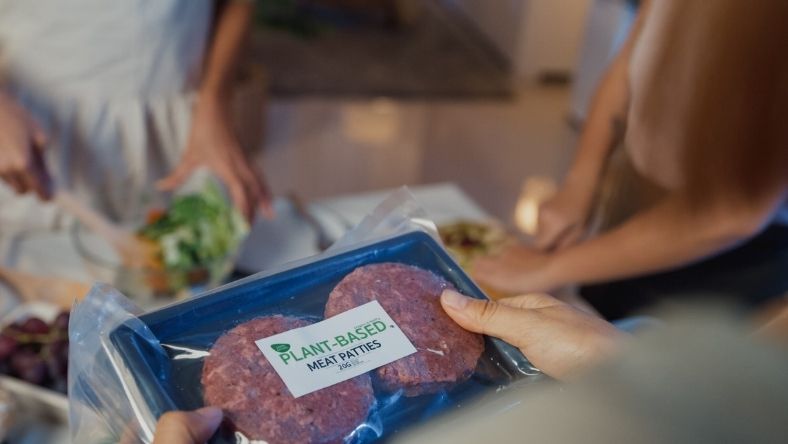
The US plant-based meat industry is entering a new phase marked less by expansion and more by discipline, as producers respond to slower sales growth and rising price sensitivity among consumers.
After several years of rapid rollout in supermarkets and restaurants, alternative protein companies are adjusting to a market in which price has become the central concern. Inflation has prompted shoppers to compare products more closely, and many remain reluctant to pay a premium for plant-based burgers and sausages over conventional meat.
Data from the Good Food Institute suggest that price gaps continue to limit repeat purchases. Some retailers are reassessing shelf space as demand moderates, while investors are placing greater emphasis on cost control and clearer paths to profitability. The focus has shifted from rapid revenue growth to operational efficiency.
Producers are responding with cost-cutting measures, including automation, streamlined manufacturing and tighter supply chains. Several companies are also expanding partnerships with restaurant chains and institutional buyers, where direct price comparisons with raw meat are less visible and trial rates can be higher. By integrating plant-based options into menus rather than positioning them solely beside conventional meat in retail aisles, brands are seeking new routes to adoption.
Industry analysts describe the current period as one of maturation. Consumer interest in health and environmental concerns remains, but purchasing decisions increasingly depend on affordability and convenience, alongside improvements in taste and texture.
Competition is intensifying. Large meat processors have broadened their alternative protein portfolios, using scale advantages to contain costs. Start-ups, meanwhile, are refining recipes and sourcing strategies in pursuit of price parity.
Regulatory scrutiny continues to evolve. Several US states have introduced or enacted rules restricting the use of terms such as “meat” and “burger” for plant-based products, with related cases moving through federal courts. At the federal level, the Food and Drug Administration and the Department of Agriculture have discussed labelling frameworks, signalling continued policy attention.
Whether the sector can narrow price gaps will shape its next stage of growth. For now, companies are recalibrating operations in an effort to align sustainability ambitions with consumer budgets.
Latest News
6 Mar 2026
The Dairy-Free Protein That Outperforms Real Whey4 Mar 2026
Inside Europe’s New Testbed for Alt Protein Production2 Mar 2026
Vivici Bets on “Pink Gold” Made Without Cows25 Feb 2026
Can Algorithms Outpace the Lab in Drug Discovery?
Related News
INNOVATION
6 Mar 2026
The Dairy-Free Protein That Outperforms Real Whey

TECHNOLOGY
4 Mar 2026
Inside Europe’s New Testbed for Alt Protein Production

INSIGHTS
2 Mar 2026
Vivici Bets on “Pink Gold” Made Without Cows
SUBSCRIBE FOR UPDATES
By submitting, you agree to receive email communications from the event organizers, including upcoming promotions and discounted tickets, news, and access to related events.